

How to Use Sex Toys Safely: A Beginner's Guide

The short answer: knowing how to use sex toys safely comes down to four habits – choose a body-safe material, match your lubricant to the toy, always use a flared base for anal play, and clean your toy before and after every session. Get those four things right and you are already ahead of most beginners.
This guide covers everything a first-time buyer needs to know: what materials to look for, how to pick the right lubricant, the non-negotiable rules for anal toys, and how to keep things hygienic. Whether you are buying your first sex toy or adding to a small collection, the principles here apply across the board.
How to use sex toys safely
Using sex toys safely is straightforward once you understand the basics: start with a body-safe material, use the right lubricant, go slow, and clean up properly. These are not complicated rules – they are just habits that protect your health and make every experience more comfortable.
Body-safe materials are the foundation. The terms to look for are platinum-cure silicone, ABS plastic, borosilicate glass, and stainless steel. These materials are non-porous, meaning bacteria cannot hide in microscopic surface gaps. Avoid anything labelled “jelly”, “rubber”, or “PVC” – these are porous materials that can harbour bacteria even after washing, and some contain plasticisers that can cause skin irritation.
Beyond materials, the single most important habit is to go slow – especially if you are new to a particular type of toy or sensation. Rushing increases the chance of discomfort or minor injury. Start at the lowest vibration setting, use plenty of lubricant, and give your body time to adjust. Pleasure is not a race.
Choosing the right lubricant for your toy
The right lubricant depends entirely on what your toy is made from. Water-based lube is the safest choice for silicone toys because silicone-based lubricants can degrade the surface of silicone toys over time, making them sticky and porous.
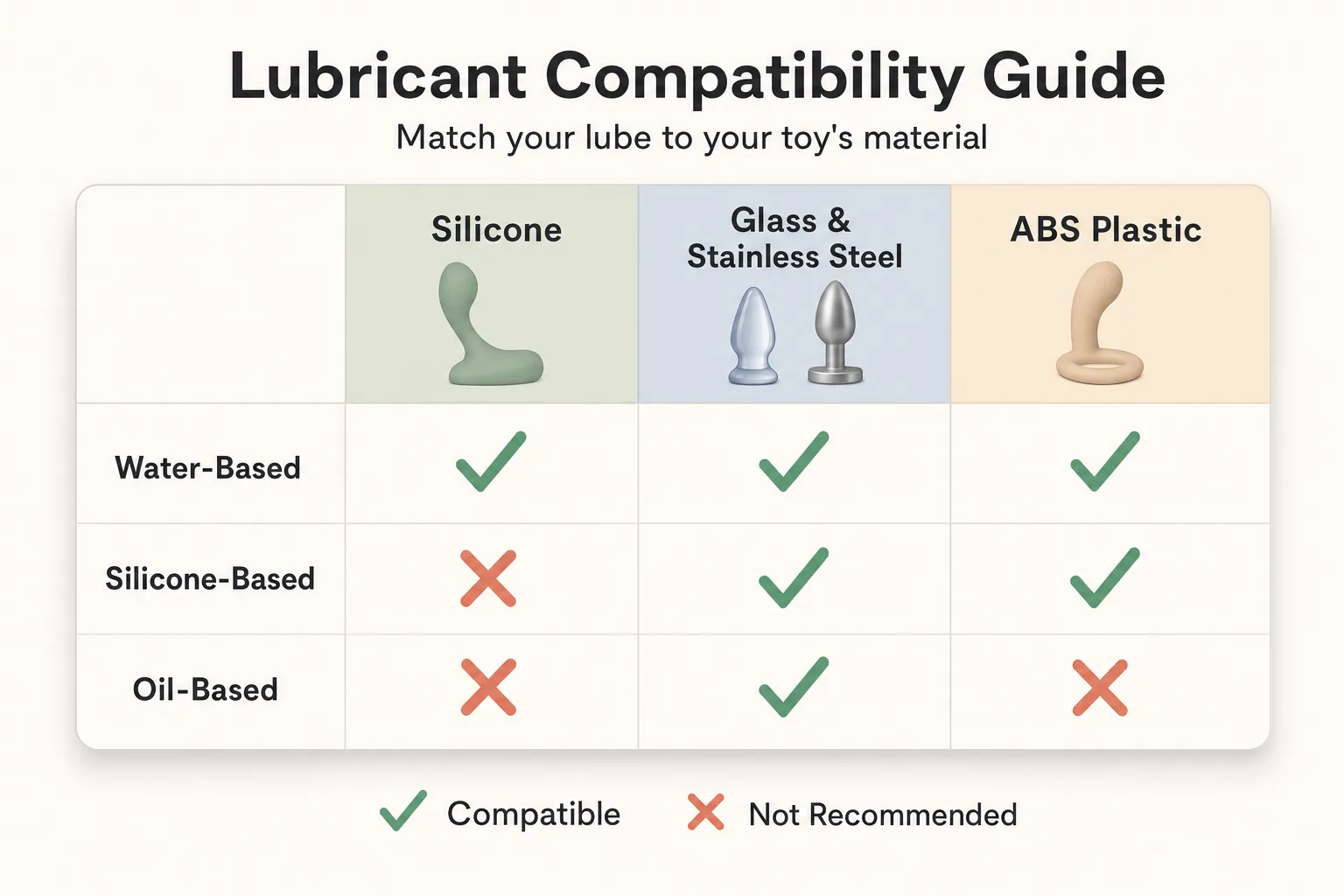
Here is a quick reference by material:
- Silicone toys: use water-based lube only. Silicone-on-silicone contact breaks down the toy’s surface.
- Glass or stainless steel toys: compatible with water-based, silicone-based, and oil-based lubricants. These non-porous materials are not affected by lubricant chemistry.
- ABS plastic toys: water-based lube is the safe default. Some silicone lubes are fine, but check the manufacturer’s guidance.
Water-based lube is also the best choice if you are using condoms with your toy – oil-based products degrade latex. A good water-based formula will need reapplying during longer sessions, but that is a minor trade-off for versatility and compatibility. Browse the range of lubricants to find a formula that suits your needs.
The non-negotiable rule for anal toys
Every toy used anally must have a flared base – a wide, flat base or a retrieval ring that is significantly wider than the toy’s body. The rectum can draw objects inward, and without a flared base there is a real risk of a toy becoming lodged internally, which is a medical emergency.
This rule applies regardless of experience level. Even a small beginner plug needs a flared base. Toys designed for vaginal use – including many dildos – are not always safe for anal use unless they are explicitly designed with a flared base or retrieval cord. Always check the product description before use.
For beginners, graduated anal trainer sets are a sensible starting point. These typically include two or three plugs of increasing size, allowing you to build up gradually rather than jumping straight to a larger toy. Use generous amounts of lubricant – the anal canal does not self-lubricate the way the vagina does – and stop immediately if you feel sharp pain rather than pressure.
How to clean and store your toys
Cleaning your toy before and after every use is the single most important hygiene habit you can build. For non-motorised toys made from non-porous materials (glass, stainless steel, solid silicone without electronics), you can boil them, run them through a dishwasher on the top rack without detergent, or use a 10% bleach solution followed by a thorough rinse.
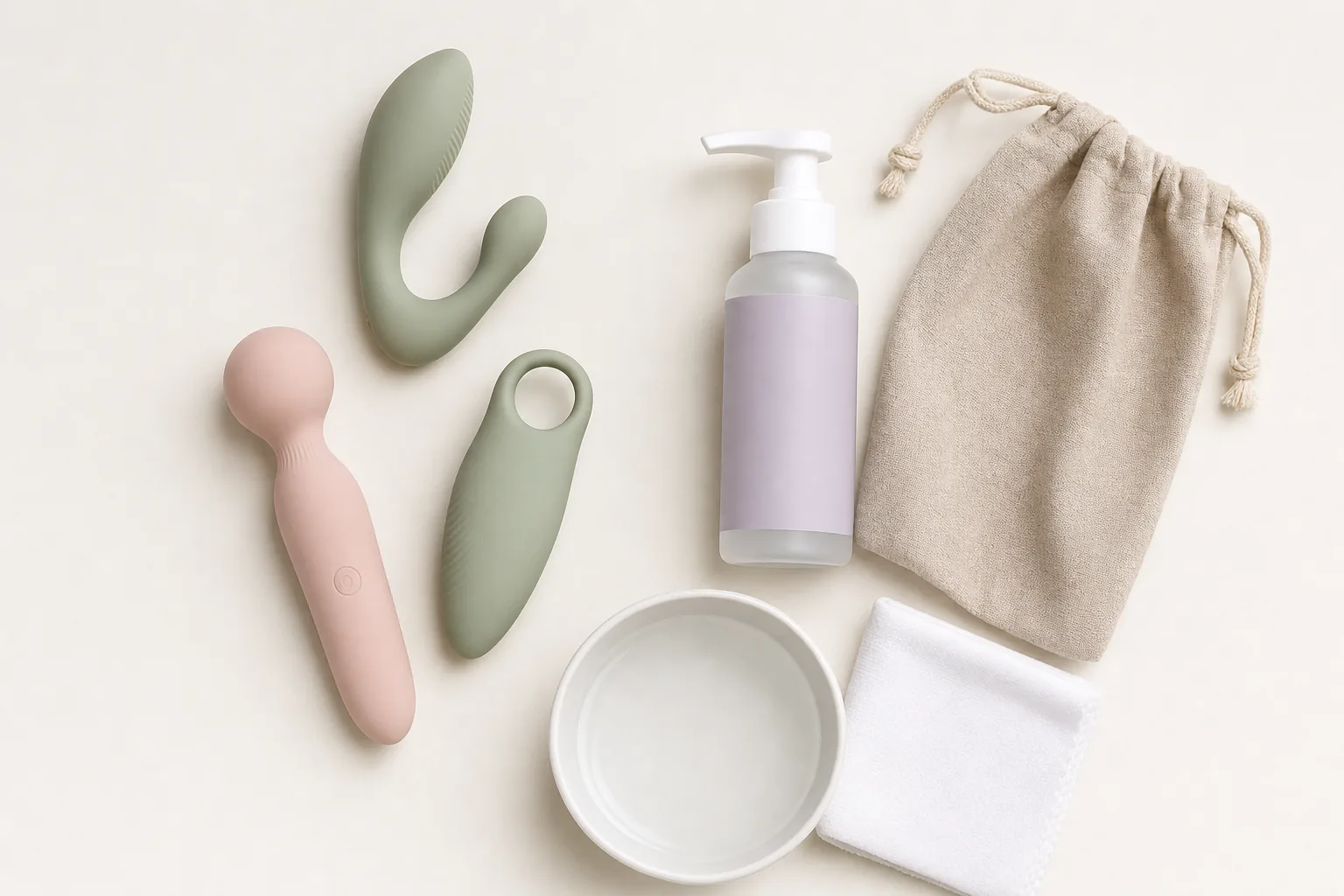
For motorised or rechargeable toys, boiling is not an option. Wash these with warm water and a dedicated toy cleaner or a small amount of unscented antibacterial soap, then rinse thoroughly and allow to air dry before storing. Never submerge a toy that is not rated as fully waterproof – check the product’s IPX rating if you are unsure.
Storage matters too. Keep toys in individual cotton pouches or the original packaging to prevent different materials from touching each other – some materials react on contact and can become tacky or degraded. Store away from direct sunlight and heat, which can warp softer materials over time. A cool, dry drawer is all you need.
Picking your first sex toy
Your first sex toy should match your curiosity, not your ambition. A mid-size bullet vibrator or a slim, body-safe silicone vibrator is a low-pressure starting point for most people – they are versatile, easy to use, and widely available. If penetration is what you are after, a smooth, non-textured silicone dildo in a modest size gives you control over depth and pace without overwhelming sensation.
Think about what kind of stimulation appeals to you – external, internal, or both – and let that guide your choice rather than picking the most feature-rich option. A toy with fifteen vibration modes is not inherently better than one with three if you are still working out what you enjoy. Simplicity is underrated when you are starting out.
Price is worth considering, but the cheapest options are often made from the porous materials mentioned earlier. A mid-range toy from a reputable brand in platinum-cure silicone or ABS plastic will last longer, clean more reliably, and feel better against skin than a budget jelly option. Brands like Satisfyer, We-Vibe, and Lovense all offer entry-level options in body-safe materials at accessible price points.
Ready to find something that suits you? Browse vibrators for a range of styles and sizes – from compact bullets to wand-style options – all in body-safe materials with clear product descriptions to help you choose with confidence.