

Body-Safe Sex Toys: A Complete Materials Guide

The short answer: body safe sex toys are made from non-porous, phthalate-free materials – primarily platinum-cured silicone, borosilicate glass, stainless steel, and ABS plastic. These materials cannot harbour bacteria between uses and do not leach harmful chemicals. Toys made from porous TPE, PVC, or jelly compounds carry real hygiene and chemical risks and are best avoided for internal use.
This guide walks through every major material you will encounter when shopping for adult toys in Australia, explains what makes each one safe or risky, and helps you make a confident, informed choice. Whether you are buying your first toy or upgrading an older collection, understanding materials is the single most important thing you can do for your health and your wallet.
What makes body safe sex toys actually safe?
A toy qualifies as body safe when it is both non-porous and free from harmful plasticisers like phthalates. Non-porous materials have no microscopic holes or channels where bacteria, mould, or bodily fluids can hide – meaning a thorough wash genuinely cleans the surface. Phthalate-free means the material does not contain the chemical softeners linked to hormonal disruption that were common in cheap PVC and jelly toys throughout the 1990s and 2000s.
Porosity is the bigger practical concern for most buyers. Even if a porous toy is labelled “phthalate-free”, its surface can still trap bacteria and is impossible to fully sterilise. Over time, porous toys can develop an odour, degrade in texture, and become a source of irritation or infection – particularly for anyone prone to bacterial vaginosis or yeast infections. The safest approach is to treat porosity and phthalate content as two separate tests, and only buy toys that pass both.
Certifications can help, but they are not the whole story. Look for toys that explicitly state “platinum-cured silicone”, “borosilicate glass”, or “body-safe ABS”. Vague terms like “skin-safe”, “hypoallergenic”, or “soft rubber” are not meaningful safety claims and often appear on porous products.
The best body-safe materials and what to expect from each
Platinum-cured silicone is widely regarded as the gold standard for soft, flexible adult toys. Body safe silicone is non-porous, phthalate-free, odourless, and stable at a wide range of temperatures. It can be sterilised by boiling, running through a dishwasher (top rack, no detergent), or wiping with a 10% bleach solution – making it genuinely reusable without hygiene compromise. Silicone ranges from very soft and squishy to firm, depending on the formulation, so there is a texture for every preference. The one compatibility note: silicone-based lubricants can degrade silicone toy surfaces over time, so pair silicone toys with a water-based lubricant instead.
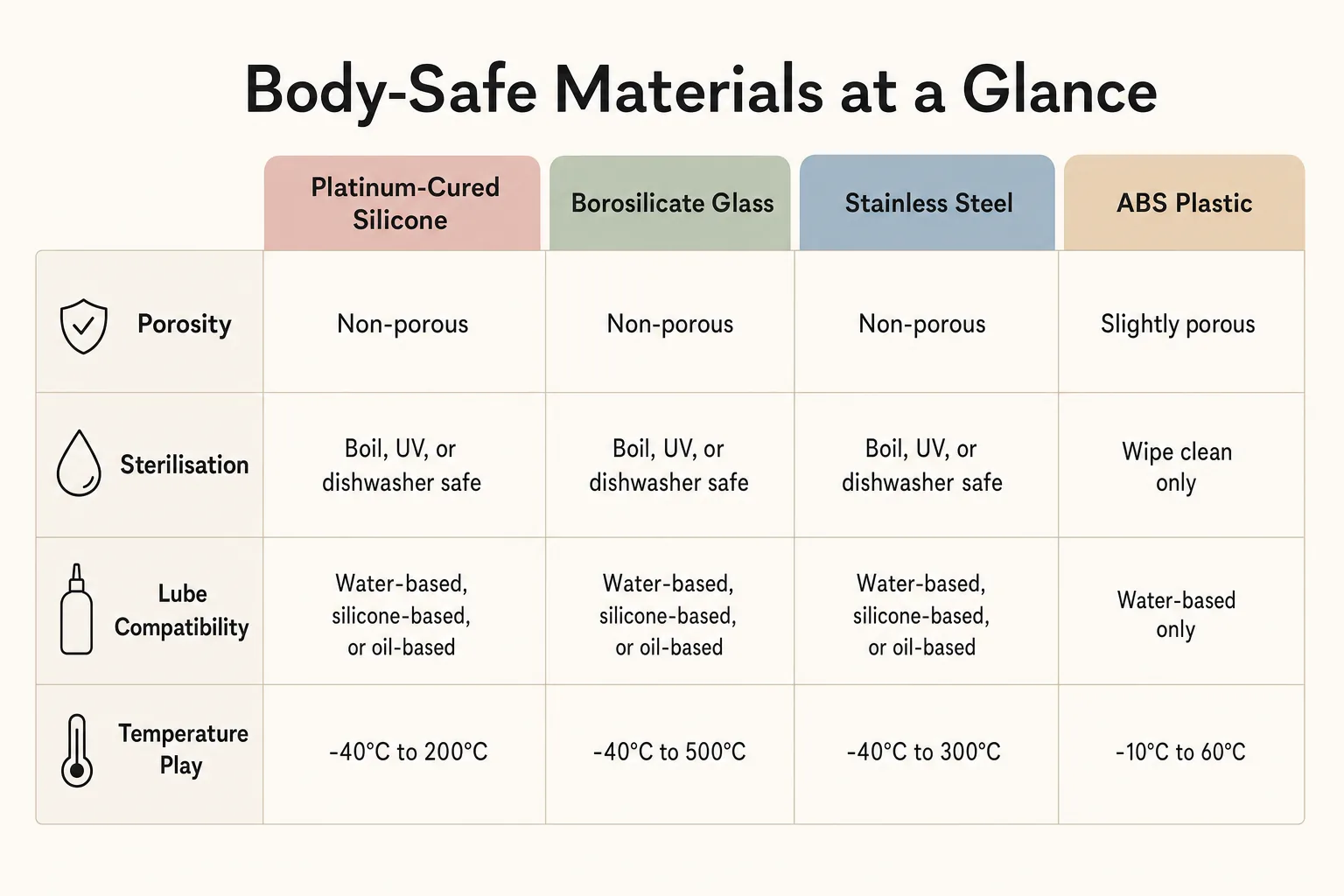
Borosilicate glass is non-porous, completely inert, and can be sterilised the same ways as silicone. It is also temperature-responsive – warm it under hot water or cool it in the fridge for added sensation. Quality glass toys are made to withstand normal use without shattering, though you should inspect them before each use and retire any toy that develops a chip or crack. Glass toys are a popular choice for people who want firm, smooth stimulation with easy maintenance.
Stainless steel (specifically 316-grade surgical steel) shares all the same benefits as glass – non-porous, sterilisable, temperature-play capable – and adds significant weight, which many people find enhances sensation. It is also compatible with any lubricant, including silicone-based formulas.
ABS plastic is the hard, rigid plastic used in most vibrator shells and bullet vibrators. It is non-porous and phthalate-free, though it cannot be boiled – clean it with toy cleaner or mild soap and water. ABS is not flexible, so it is best suited to external use or toys where firmness is a feature rather than a drawback. Many vibrators combine an ABS motor housing with a platinum silicone outer layer to get the best of both materials.
Which materials to avoid and why
Porous TPE (thermoplastic elastomer), TPR (thermoplastic rubber), PVC, and jelly rubber are the materials most commonly found in budget toys, and they are the ones most worth avoiding for internal use. Porous TPE and its relatives feel soft and realistic but cannot be fully cleaned – bacteria and fungi settle into the microscopic surface structure and remain there regardless of how thoroughly you wash the toy.
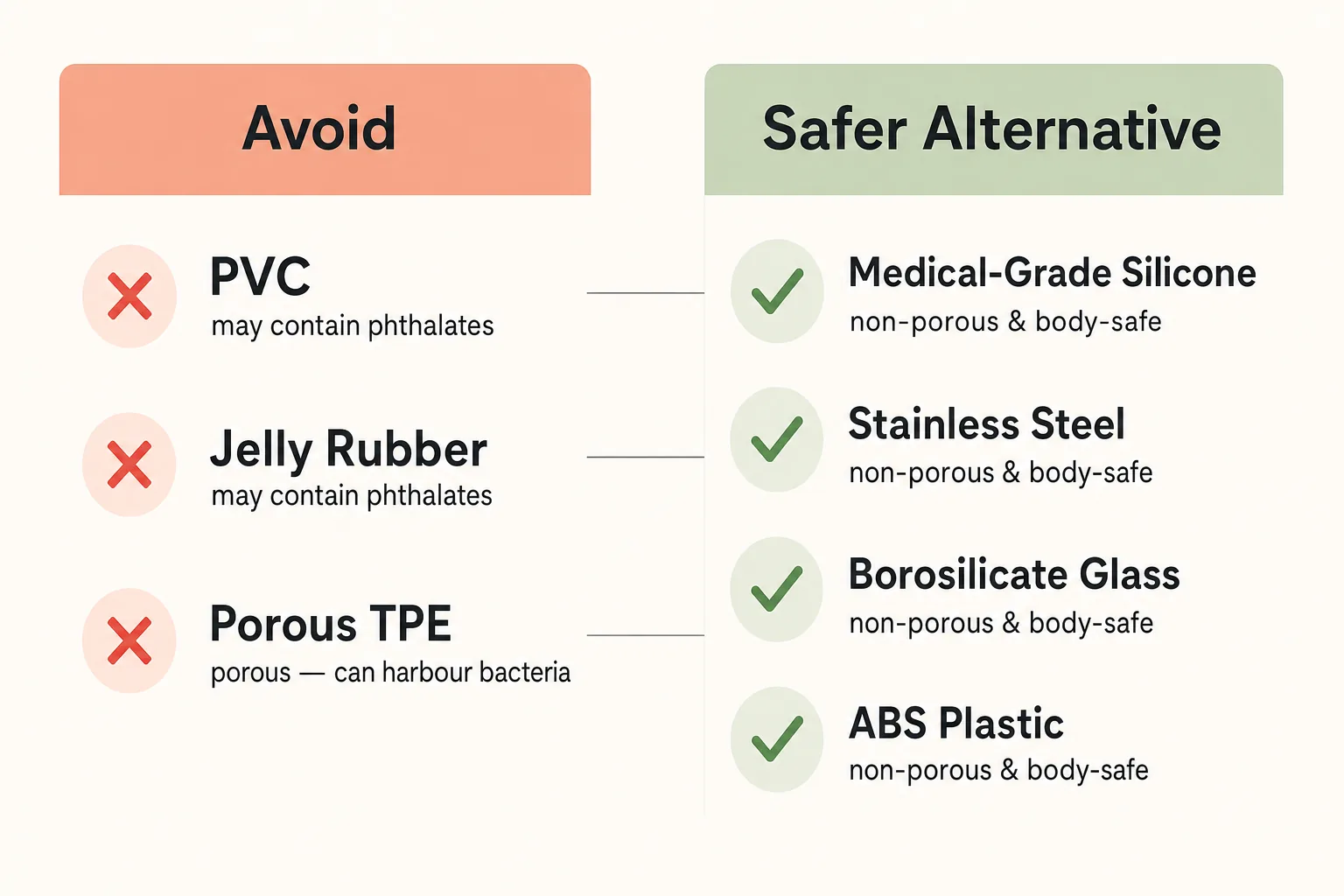
PVC and jelly toys have an additional problem: many are manufactured with phthalate plasticisers to achieve their soft, flexible texture. Phthalates are endocrine-disrupting chemicals, and while regulatory pressure has reduced their use in some markets, there is no consistent international standard that applies to adult toys. A toy that smells strongly of chemicals straight out of the packaging – sometimes described as a “new shower curtain” smell – is a reliable warning sign.
If you already own porous toys and are not ready to replace them, using them with a condom over the surface is a practical harm-reduction measure. It will not make the toy body safe, but it does create a barrier between the material and your body. For penetrative use, this is a reasonable interim step.
Cyberskin and “realistic skin” blends fall into the same porous category. They are designed to mimic the feel of skin, which means they are soft and porous by design. They also require cornstarch powder to maintain their texture and degrade faster than silicone or glass. They are not recommended for anyone with a sensitive immune system or a history of recurring infections.
How to check a toy’s material before you buy
The most reliable method is to read the manufacturer’s product description carefully and look for specific material names, not marketing language. “Platinum-cured silicone”, “borosilicate glass”, “316 stainless steel”, and “ABS plastic” are precise terms. “Soft silicone”, “silicone-feel”, “silky smooth”, and “body-friendly” are not – they may describe a silicone-blend or a TPE product being marketed with silicone-adjacent language.
Price is a rough proxy but not a reliable one. Genuine platinum silicone costs more to produce than TPE, so a very cheap flexible toy is unlikely to be pure silicone – but an expensive toy can still be made from inferior materials. The flame test (holding a flame briefly to the toy surface – silicone chars black and wipes clean, TPE melts or smells) is sometimes cited online, but it is destructive and not practical for a toy you are considering purchasing.
When in doubt, contact the retailer or check the brand’s website for a material safety data sheet or explicit material declaration. Reputable brands that use platinum silicone will say so clearly because it is a selling point. Brands that are vague about materials are usually vague for a reason.
For dildos specifically, the material question is especially important because these toys are designed for internal use and prolonged skin contact. Browsing dildos made from platinum silicone, glass, or stainless steel is a straightforward way to filter your options to the safest choices from the start – and you will find a wide range of sizes, shapes, and firmness levels within those material categories alone.