

How to Clean Sex Toys: Materials, Care and Storage

The short answer: how to clean sex toys depends on the material – most body-safe toys can be wiped down with a dedicated toy cleaner or mild soap and warm water after every use, while non-porous materials like silicone, glass, and stainless steel can be fully sanitised between partners or after illness. Getting this right protects your health and extends the life of your toys.
This guide covers the cleaning method for each major material type, what to do about storage between sessions, and the signs that tell you a toy has reached the end of its useful life. Whether you have one bullet vibrator or a full collection, the same core principles apply.
How to clean sex toys: the core method
For most toys, the correct method is to rinse with warm water, apply a small amount of fragrance-free soap or a purpose-made toy cleaner, work it over the surface for 20-30 seconds, then rinse thoroughly and air dry on a clean cloth before storing. That process handles everyday cleaning between sessions and removes the bacteria, lubricant residue, and body fluids that accumulate with use.
The key variable is whether your toy is waterproof. Fully waterproof toys – those with an IPX7 rating or described as submersible – can be rinsed under running water without risk. Splash-resistant toys (IPX4 or similar) should be wiped rather than submerged, keeping water away from the charging port or seam. If you are unsure, check the packaging or the brand’s website before running anything under the tap.
Purpose-made hygiene and cleaning products designed for adult toys are a convenient option – most are spray-on formulas that you apply, leave for 30 seconds, then wipe away without rinsing. They are especially useful when you are away from a sink or want a quick clean between uses during a session. They do not replace a full soap-and-water wash, but they are a solid supplement.
Material-by-material cleaning guide
The material a toy is made from determines how thoroughly it can be sanitised and which cleaning methods are safe to use on it. Non-porous materials can be fully disinfected; porous materials cannot – they harbour bacteria in microscopic surface channels even after washing.
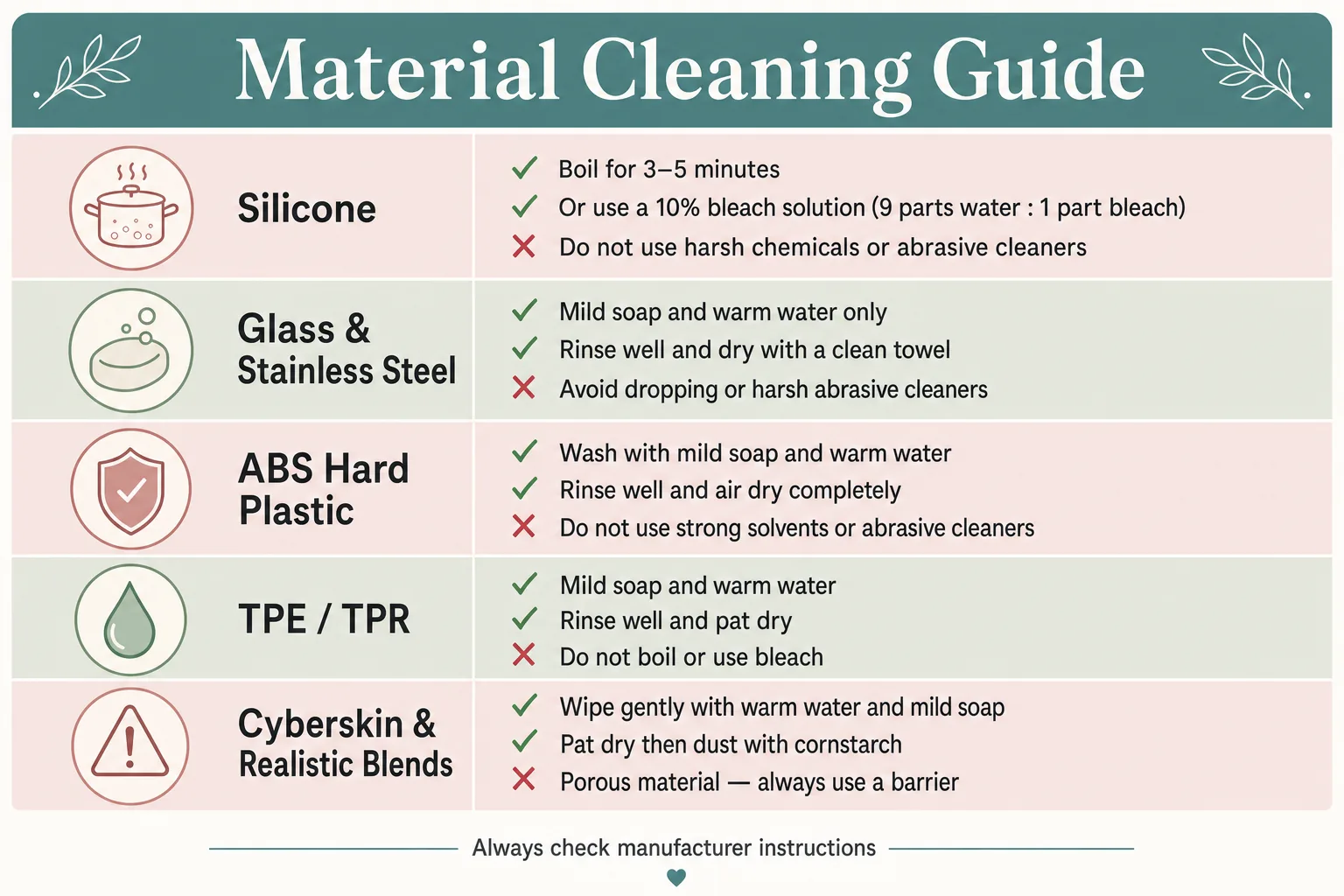
- Platinum-cure silicone, stainless steel, borosilicate glass, and glazed ceramic are non-porous. Solid (non-motorised) versions of these can be boiled for 3 minutes, run through the top rack of a dishwasher without detergent, or wiped with a 10% bleach solution (rinse thoroughly afterwards). Motorised silicone toys cannot be boiled – use soap and water or a toy cleaner instead, keeping the motor dry.
- ABS hard plastic is technically non-porous but cannot tolerate heat. Wipe with toy cleaner or soap and water only. Do not boil or use bleach solutions on painted or printed surfaces.
- TPE and TPR are porous materials commonly used in stretchy or realistic-feel toys. They cannot be fully sanitised. Clean thoroughly with soap and warm water after every use, allow to dry completely, and consider using a condom over the toy to reduce direct contact – especially if sharing.
- Cyberskin, UR3, and similar blends are also porous and require gentle care – harsh soaps can degrade the material. Use a cleaner specifically formulated for these materials, pat dry (do not rub), and dust lightly with cornstarch to maintain the texture.
- Latex is porous and degrades with oil-based products. Clean with mild soap and water only, and never use silicone or oil-based lubricants with latex toys or condoms.
If you are unsure of the material, treat the toy as porous and clean accordingly. A toy that lists no material or uses vague terms like “skin-safe rubber” is almost certainly porous.
Cleaning and storage: keeping toys safe between uses
Cleaning and storage go together – a toy that is washed correctly but stored carelessly can pick up dust, lint, or cross-contamination from other toys before it is used again. The goal is to store each toy clean, dry, and separated from other items.
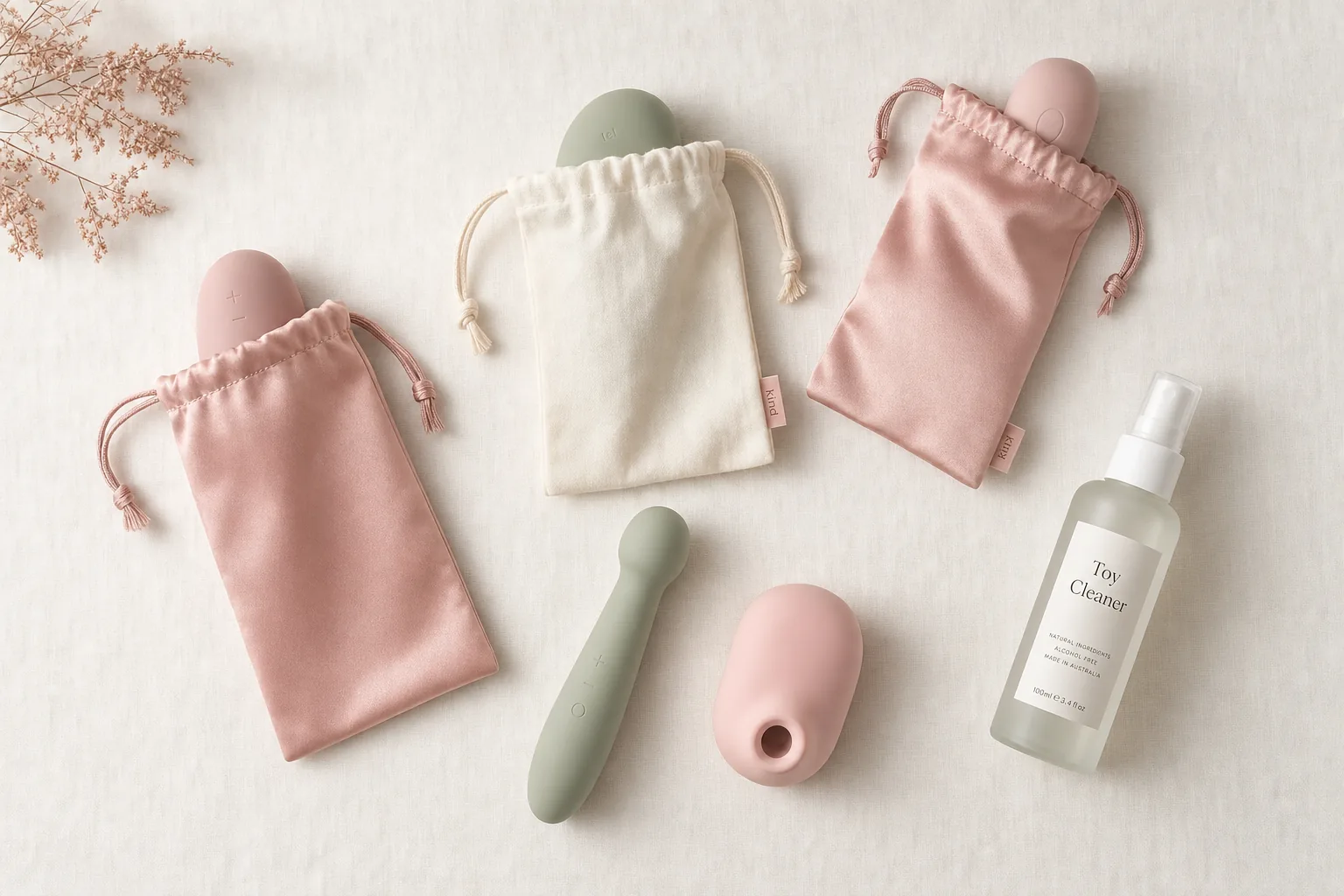
Most toys come with a storage pouch or box; use it. If yours did not, a clean cotton or satin drawstring bag works well for individual toys. Avoid storing multiple toys loose together in a single container – some materials react with each other on contact. Silicone toys stored touching other silicone toys can develop a tacky surface over time. Hard plastic and metal toys can scratch softer materials. Keeping each toy in its own bag or compartment is the simplest fix.
Temperature and light matter too. Keep toys away from direct sunlight and extreme heat – a bedside drawer or a dedicated storage box in a cool, dry spot is ideal. Avoid storing toys in the bathroom long-term; the humidity from showers accelerates material degradation and encourages mould growth in porous materials.
Battery-operated toys should have their batteries removed for long-term storage to prevent corrosion. Rechargeable toys are best stored at around 50-70% charge if you will not be using them for several weeks – storing at 0% or 100% for extended periods can shorten battery life.
When to replace a toy
A toy should be replaced when its surface shows cracks, stickiness, discolouration, or a persistent odour that does not clear after thorough cleaning – these are signs the material has degraded and can no longer be properly sanitised. For porous materials, this threshold arrives sooner than for non-porous ones.
Stickiness in silicone toys is a common sign of material breakdown, often caused by contact with incompatible products (silicone-based lubricants on silicone toys, for example) or prolonged UV exposure. A sticky surface cannot be cleaned back to safe use – the degradation is structural. Similarly, any toy with a crack or chip – especially glass or ceramic – should be retired immediately, as sharp edges present a real injury risk.
Motorised toys that develop a burning smell, make unusual noises, or show signs of water ingress around the charging port should also be retired. These are electrical faults, not cleaning problems.
A note on lubricant compatibility and hygiene
Using the right lubricant is part of good toy hygiene – the wrong type can degrade your toy’s surface and make it harder to clean properly. As a general rule, water-based lubricants are compatible with all toy materials and all condom types, making them the safest default. Silicone-based lubricants offer longer-lasting slip but should not be used with silicone toys, as they can break down the surface over time. Oil-based lubricants are incompatible with latex and most TPE/TPR materials.
If you use an anal toy, cleaning between sessions is especially important given the higher bacterial load involved. A warm water rinse immediately after use – before a full wash – makes the cleaning process easier and more effective. For anyone who also uses an anal douche as part of their routine, dedicated douche products are available to help with preparation beforehand.
Ready to stock up on the right cleaning products for your collection? Browse hygiene and cleaning supplies including toy-safe sprays, wipes, and storage bags designed to make care and cleaning a straightforward part of your routine.