

How to Use Nipple Clamps Safely and Comfortably
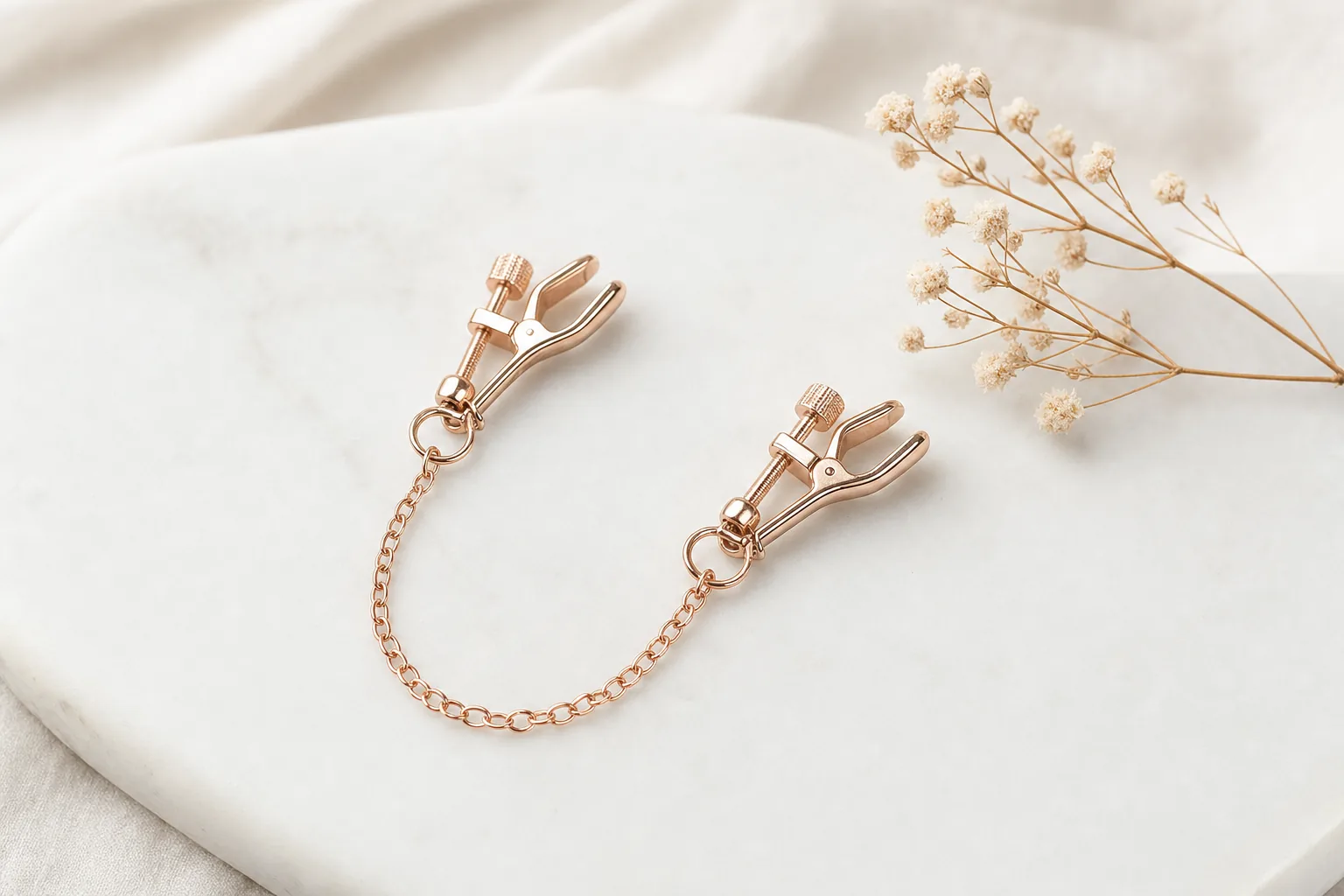
The short answer: to use nipple clamps safely, start with adjustable clamps set to their loosest tension, wear them for no more than 10-15 minutes at a time, and always remove them slowly to manage the rush of sensation when blood flow returns. Nipple play can be intensely pleasurable, but a little preparation makes the difference between a great experience and an uncomfortable one.
This guide covers everything a first-timer needs to know – how clamps actually work, how to find the right pressure, how long to keep them on, and what to look for when choosing your first pair. It applies whether you are exploring solo or with a partner.
How to use nipple clamps safely
Using nipple clamps safely comes down to three things: starting loose, watching the clock, and removing them gradually. Before you put them on, spend a few minutes warming up the nipples with light touch or gentle suction – aroused tissue is more receptive and less likely to feel sharp discomfort. Apply the clamp to the flat of the nipple rather than just the tip, which distributes pressure more evenly. If you are using adjustable clamps, back the tension off to its minimum before you start, then tighten incrementally until you find a level that feels like firm, pleasurable pressure rather than a pinch.
During wear, check in with yourself (or your partner) every few minutes. The nipple should stay pink or lightly flushed – if it turns white, blue, or numb, that is a sign the clamp is too tight or has been on too long. Remove it immediately in that case. Keep a pair of safety scissors nearby if you are using clamps attached to rope or chain restraints, so removal is never delayed.
When you are ready to take them off, loosen the tension slowly rather than pulling the clamp away in one motion. The moment blood rushes back into the tissue is often the most intense part of the experience – pleasurable for many people, but sharp if it happens too fast. Massaging the area gently afterwards helps ease the transition.
How tight is too tight – finding the right pressure
The right pressure is the lightest setting that still produces noticeable sensation – anything beyond that should be added gradually and only if you want more intensity. Nipple tissue is sensitive and has a relatively low threshold compared to, say, the inner thigh. A clamp that feels fine at first can become painful within minutes as the initial endorphin response fades, so err on the side of less tension, especially early on.
A useful test: after applying the clamp, wait 60 seconds and reassess. Sensation often intensifies on its own as blood pools slightly in the tissue. If the pressure already feels strong after a minute, you do not need to tighten further. If it feels barely noticeable, add one small increment and wait again.
Avoid clamps with fixed, non-adjustable tension if you are new to nipple stimulation. Clover clamps (also called butterfly or Japanese clamps) are popular with experienced users because they tighten automatically when the connecting chain is tugged – that is an advanced feature, not a beginner one. Start with a screw-adjustable or slider-adjustable style so you stay in full control of the pressure at every stage.
How long should you keep nipple clamps on?
For beginners, 10-15 minutes is a sensible upper limit per session. Experienced users sometimes wear clamps for longer, but 20-30 minutes is generally considered the practical ceiling for most people before tissue fatigue and circulation concerns become real factors. There is no benefit to pushing past the point of comfort – the most intense sensation happens in the first few minutes and again at removal, so longer wear does not automatically mean more pleasure.

If you want to extend a session, remove the clamps, massage the area for a few minutes to restore circulation fully, and then reapply if you choose. This on-off approach is safer than continuous wear and can actually heighten sensitivity between rounds.
Never fall asleep wearing nipple clamps. Prolonged restriction of blood flow to any tissue carries a real risk of injury, and the gradual numbing that comes with extended wear can mask warning signs. Set a timer if there is any chance you might lose track of time during an intense scene.
Choosing your first pair – what to look for
Adjustable clamps are the right starting point for almost everyone new to nipple play. Look for a screw-barrel or slider mechanism that lets you dial in tension precisely, rather than a spring-loaded design with a fixed bite. Silicone or rubber-tipped jaws are gentler on skin than bare metal, and a wider jaw surface spreads pressure more evenly than a narrow one.

Common styles to know:
- Screw-adjustable clamps – a small barrel you turn to tighten or loosen. Reliable, precise, and the most beginner-friendly option.
- Tweezer clamps – two thin rods held together by a sliding O-ring. Lightweight and easy to adjust mid-session by moving the ring up or down.
- Clover (butterfly) clamps – self-tightening when the chain is pulled. Intense by design; better suited to experienced users who enjoy that escalating pressure.
- Vibrating clamps – combine pressure with a small motor for added stimulation. A good next step once you are comfortable with basic clamp sensation.
Material matters too. Stainless steel clamps are easy to clean and hold temperature well (you can warm or cool them for added sensation), while silicone-coated options are softer and more forgiving. Avoid anything with rough edges or poorly finished metal that could snag skin.
If you are buying for partner play, consider a style connected by a chain or cord – the chain can be used for very light tugging once both partners are comfortable, and it keeps the clamps paired so neither gets lost mid-scene.
Caring for your clamps and staying safe long-term
Cleaning nipple clamps after every session is straightforward and important – skin contact means bacteria can transfer, especially if there is any minor abrasion. Metal clamps (stainless steel, aluminium) can be wiped down with a toy-safe antibacterial cleaner or a diluted isopropyl solution. Clamps with silicone tips or coatings should be washed with warm water and mild soap, then dried thoroughly before storage to prevent any moisture build-up around the joint mechanism.
Check the tension mechanism before each use. Screw barrels can loosen over time, and a clamp that suddenly releases or tightens unexpectedly is both startling and potentially uncomfortable. A quick test on your fingertip before play confirms the mechanism is working smoothly.
Store clamps in a pouch or case away from other metal items to prevent scratching the jaw surfaces. If the tips are silicone-coated, keep them away from silicone-based lubricants, which can degrade the coating over time – water-based lubricant is fine if you want to soften the initial application.
Ready to explore further? Browse the full range of nipple play accessories – from beginner-friendly adjustable styles to vibrating and weighted options – or take a wider look at the bondage category if you want to pair clamps with other sensation play gear.