

Silicone vs Water Based Lube: Which Should You Choose?

The short answer: silicone vs water based lube comes down to what you are using it with. Water-based lube is the safest all-rounder – it works with every toy material and every condom type. Silicone lube lasts longer and feels silkier, but it will degrade silicone toys over time, so it is best reserved for skin-on-skin use or non-silicone toys.
If you have ever stood in front of a shelf of lubricants wondering what the difference actually is, you are not alone. This guide breaks down how each formula works, when to reach for one over the other, and what to watch out for so nothing gets ruined – including your favourite toy.
Silicone vs water based lube: what is the actual difference?
The core difference between silicone vs water based lube is the carrier ingredient: water-based formulas use water (and sometimes aloe vera) as their base, while silicone-based formulas use synthetic silicone polymers like dimethicone or cyclomethicone. That single difference drives almost every other property – texture, longevity, cleanup, and compatibility.
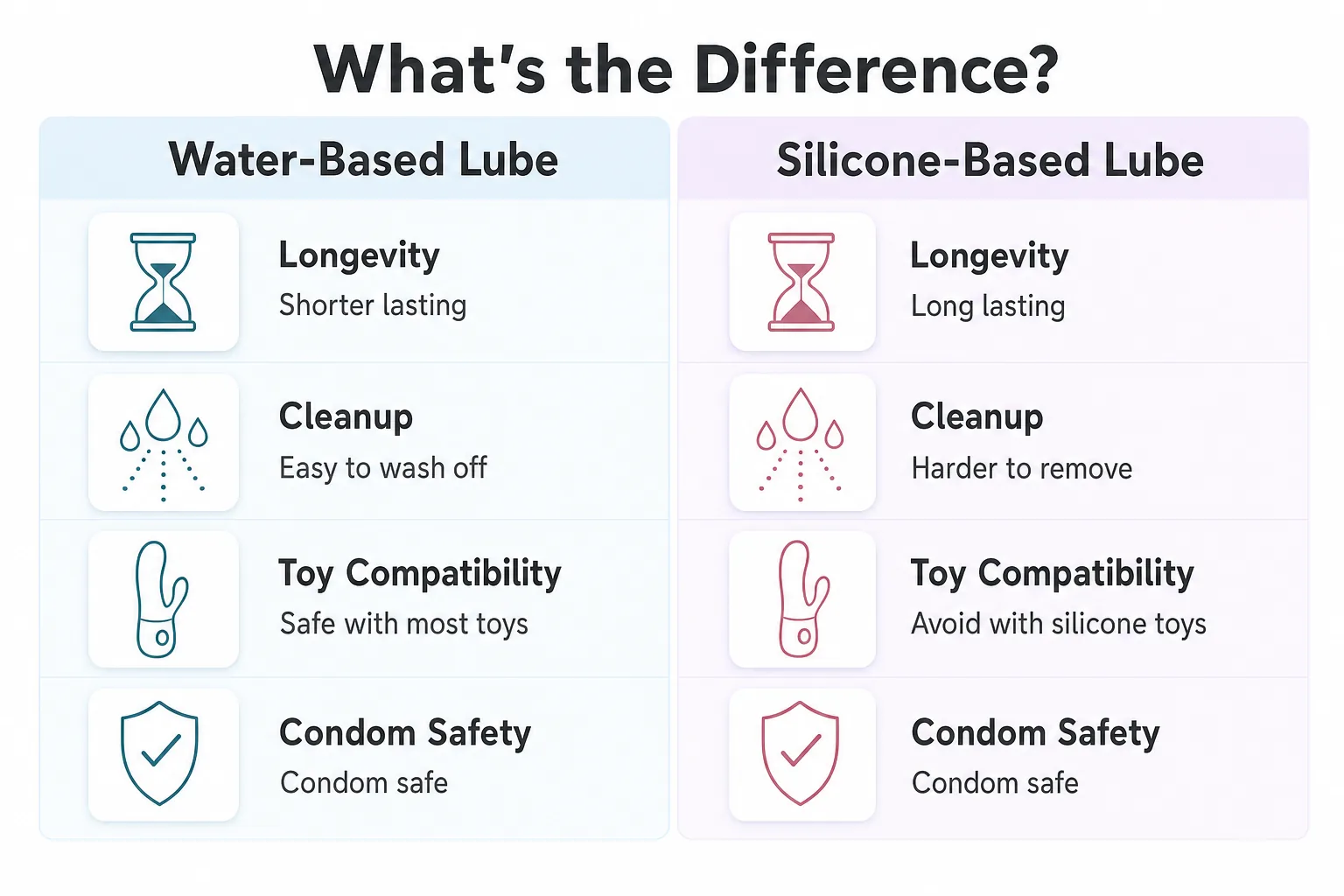
Water-based lubes are thinner to medium in consistency, absorb into the skin over time, and rinse away easily with water. Because they are water-soluble, they are compatible with latex condoms, polyisoprene condoms, and all toy materials including silicone, rubber, and TPE. The trade-off is that they can dry out during longer sessions and may need reapplication.
Silicone-based lubes do not absorb into the skin at all – they sit on the surface and create a long-lasting, slippery film that does not evaporate or dry out. This makes them popular for longer sessions, shower or bath play, and massage. The downside is that silicone polymers bond with cured silicone surfaces, which can cause silicone toys to become sticky, tacky, or structurally compromised over time.
Is silicone lube safe with condoms and toys?
Silicone lube is safe with latex and polyisoprene condoms – it does not degrade rubber the way oil-based lubes do, so it is a reliable choice for protected sex. The compatibility problem is specifically with silicone toys, not condoms.
The chemistry is straightforward: uncured silicone molecules in the lube interact with the cured silicone surface of a toy, causing the outer layer to break down. The toy may feel tacky, develop a rough texture, or start to harbour bacteria in micro-tears. This is not a scare story – it is just material science. If you are unsure whether a toy is silicone, do a patch test: apply a small amount of silicone lube to an inconspicuous spot, wait a few minutes, and wipe it off. If the surface feels sticky or looks different, stick to water-based.
For toys made from glass, stainless steel, ABS plastic, or hard acrylic, silicone lube is perfectly fine – those materials are non-porous and chemically inert. It is also a great choice for harness play, strap-on use with non-silicone dildos, and any activity where long-lasting slip is more important than easy cleanup. Browse the range of silicone-based lubricants to see the options available.
When water-based lube is the better choice
Water-based lube is the better choice whenever you are using silicone toys, latex condoms, or any toy where you are not 100% certain of the material. It is also the go-to formula for internal use with most sex toys because it is gentle, easy to clean up, and less likely to cause irritation.
Modern water-based formulas have come a long way. Thicker gel versions provide cushioning for anal play, where extra padding and reapplication are both important. Lighter, runnier versions work well for vaginal use and feel closer to natural lubrication. Some are formulated without glycerin (which can feed yeast infections in people prone to them) or without parabens, so there is real variety to choose from depending on your body’s needs.
One practical tip: keep a small bottle of water nearby during a session. A few drops of water on a water-based lube that has started to dry out will reactivate it without needing to reapply from scratch. It is a simple trick that makes a real difference. If you want to explore the full range, the water-based lube category covers everything from everyday formulas to speciality gels.
How to choose the right lube for your situation
Choosing a lube is mostly a matter of matching the formula to your activity, your body, and your toys. Run through these three questions and the answer usually becomes clear.
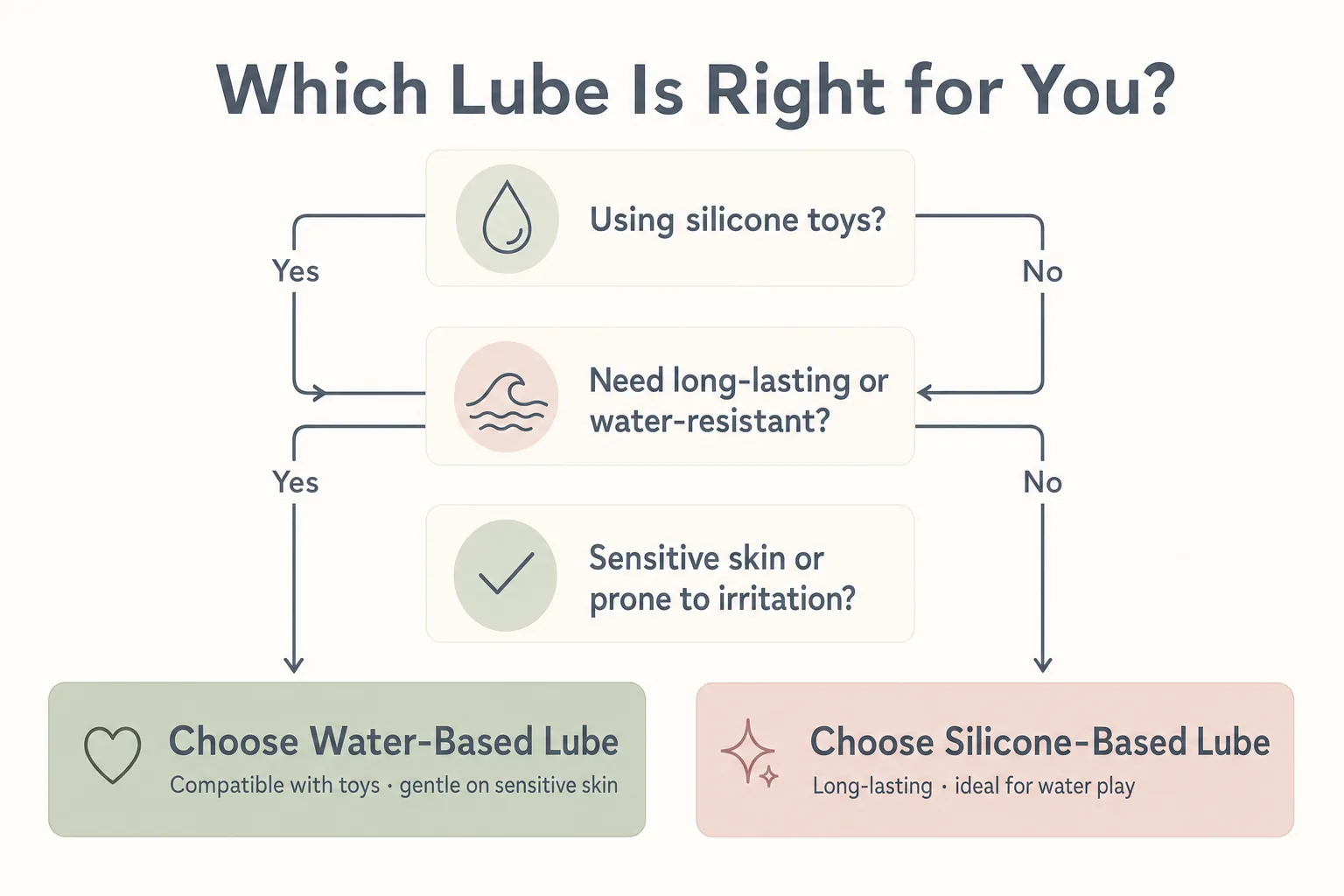
What are you using it with? If the answer is a silicone toy – vibrators, dildos, plugs, sleeves – reach for water-based every time. If you are using glass, metal, or hard plastic toys, or if there are no toys involved at all, silicone lube is a solid option for its staying power.
Where are you using it? Shower, bath, or pool play washes water-based lube away almost immediately, making it a poor choice for aquatic sessions. Silicone lube is water-resistant and holds up well in wet environments. For anal play specifically, a thicker water-based gel or a hybrid lube (which blends both bases) tends to work better than a thin formula.
How does your body respond? Some people find silicone lube leaves a residue that takes a proper wash to remove, which can feel uncomfortable. Others find certain water-based lubes cause mild irritation if they contain glycerin or propylene glycol. If you have sensitive skin or a history of reactions, look for formulas with shorter, simpler ingredient lists and test on a small area first.
Hybrid lubes – which combine a water base with a small amount of silicone – sit in the middle ground. They last longer than a pure water-based formula but are generally considered safer for silicone toys than a full silicone lube. That said, always do a patch test if you are unsure, because the silicone content varies between brands.
Storage, shelf life, and getting the most out of your lube
Both silicone and water-based lubes last well when stored correctly – keep them at room temperature, away from direct sunlight, and with the cap firmly closed. Most water-based formulas have a shelf life of one to three years once opened; silicone lubes tend to last longer because they do not evaporate or oxidise as readily.
Check the expiry date before use, especially if a bottle has been sitting in a drawer for a while. An expired water-based lube can grow bacteria or change pH in ways that may cause irritation. Silicone lube does not spoil in the same way, but the texture can change if it has been contaminated or stored poorly.
Do not mix lube types in the same session without wiping down first – layering a silicone lube on top of a water-based one on a silicone toy still carries the same degradation risk as using silicone lube directly. And never use oil-based products (coconut oil, body lotion, petroleum jelly) with latex condoms – that is a separate category with its own compatibility rules. For a full overview of every formula type in one place, the lubricants range is a good starting point when you are ready to stock up or switch things up.